
-

Try advanced features for free
Get Smarter responses, upload files, create images, and more by logging in.
Log In Sign up & Earn $5

AI Forecasting in 2026: How Smart Planning Decisions Help?
Using outdated manual spreadsheets to plan the financial future of your company is the biggest mistake that you can make. If you still rely on guesswork for quarterly revenue through historical averages, you will face huge issues. This is because market conditions change continuously, and the only way to thrive is to incorporate AI forecasting into your strategic planning process.
Must Read: AI Data Security Threats Every Company Should Know
What is AI Forecasting?
AI forecasting is the application of machine learning and advanced models to understand huge amounts of data. Rather than relying on past figures to forecast future trends, the tool uses actual real-time market data, consumer behavior cycles, supply chain dynamics, and macroeconomic factors to make highly accurate forecasts on where your business will be headed.
Unlike traditional methods, this solution makes a clean break from the time-consuming and inaccurate process of manual forecasting, which leaves most of the management teams playing defense all the time.
Understanding the Benefits of AI-Powered Forecasting
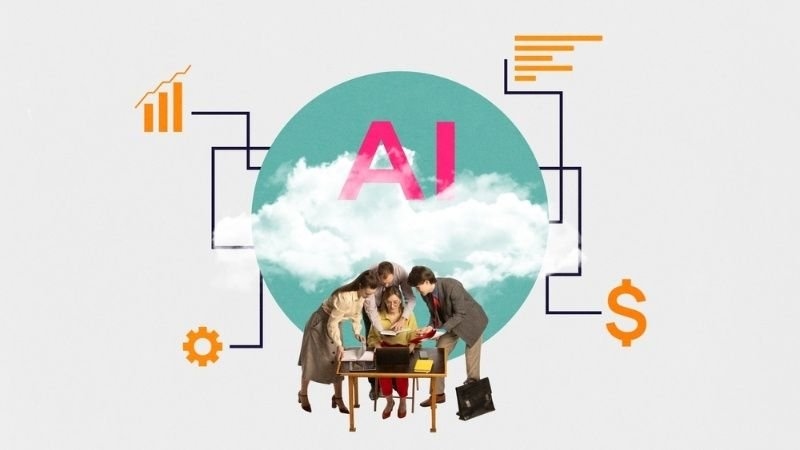
You cannot scale a high-growth company using rigid, outdated planning methods. Deploying AI-Powered Forecasting gives your leadership team an unfair competitive advantage by completely transforming how you handle data risk.
1. Erasing human bias from the numbers completely
A sales team will always modify its forecasts to ensure that its individual bonuses and teams perform better. These algorithms do not take into account the human element of people and work only according to the rules. They work only on hard data streams and offer you a very objective, naked, and highly accurate picture of your actual future revenue metrics.
2. Processing massive non-linear datasets instantly
The capacity of the human brain or even a spreadsheet is to link a small number of data points at a time. Contemporary predictive software can ingest thousands of completely unrelated data points simultaneously, including real-time competitor price fluctuations, weather changes, social media surges, and web traffic fluctuations.
3. Dropping operational forecasting cycle times to zero
The process of spending three weeks creating a quarterly forecast ensures that the data will be totally useless till it reaches the top. Modern algorithmic systems provide real-time forecasts. If your key supplier is suddenly out of commission or an overseas transportation route is closed down, the system updates it immediately.
Top Pick: Conversational AI Trends and Innovations to Watch in 2026
How Forecasting with AI Helps in Making Smarter Decisions?
Executing high-stakes corporate strategies requires absolute precision, not wishful thinking. Here is exactly how Forecasting with AI forces your management team to make better, highly profitable operational moves every single day.
1. Executing aggressive stress testing through instant scenarios
Stop debating what might happen if the economy hits a sudden bump. You can instantly run hundreds of aggressive "what-if" simulations through your data engine. The system shows you exactly how a ten percent spike in raw material costs or a sudden drop in customer retention will impact your cash reserves six months down the line, letting you build defense walls early.
2. Optimizing corporate cash flow cycles dynamically
Running out of cash while trying to scale will kill your business overnight. Advanced forecasting software tracks exactly how late your clients actually pay their invoices and spots seasonal revenue drops weeks before they hit your bank account.
3. Target high-value customers
Do not use guesswork to understand which clients want to spend more money. The predictive engine maps out the exact accounts that are ready to upgrade right now. By ruthlessly tracking specific product usage spikes and historical buying habits, the algorithm flags your hottest expansion targets immediately.
Weaponizing Predictive Analytics Across Your Infrastructure
If you are only using your data to build pretty charts for quarterly board meetings, you are completely wasting your time. You have to weave Predictive Analytics straight into the daily operational habits of every single department in your company.
1. Aligning marketing spend with real-time conversion velocity
Do not waste your ad budget by targeting channels through vanity metrics such as clicks or impressions. Predictive software analyzes past conversion rates to predict how much money the company would generate from each advertisement campaign after three months.
2. Streamlining procurement contracts before prices explode
The raw material and component markets have always been very unstable. The machine learning software is capable of analyzing the global supply chain and mining information in order to forecast the price increase that will happen soon. When your team finds out about this information, you can start working immediately.
3. Automating preventative maintenance schedules for core hardware
Waiting for a vital server rack or a factory machine to break down before you fix it is an incredibly expensive operational failure. Vibration sensors and system logs feed data directly into the predictive platform. The algorithm calculates the exact wear-and-tear trajectory and schedules maintenance windows right before a catastrophic failure happens, completely eliminating unexpected downtime.
Conclusion
You have to stop treating your corporate planning process like a creative writing exercise. The modern business arena moves far too fast to rely on slow, backward-looking financial metrics. Embracing AI Forecasting is the only way to build an operational system that can survive sudden economic shocks and scale revenue effortlessly.
Frequently Asked Questions
1. Does a massive corporate pivot destroy historical AI forecasting accuracy?
Yes. The moment you purchase a competitor company or overhaul the way your business operates entirely, the historical data that you had becomes obsolete. It will not work for predicting anything that could happen to your organization tomorrow because the past that the data belonged to no longer exists. In such a case, your engineering department needs to move quickly.
2. How do you audit the underlying logic of AI forecasting models?
You need to move away from considering your software program as a magic black box. It is critical that you implement explainable analytics immediately. You need to make sure that your compliance team inside is able to track very specific metrics that will help determine which data point caused the algorithm to predict something.
3. What data hygiene protocols are required before launching AI forecasting?
It is essential to destroy your fragmented data in time. In case your database provides the predictive algorithm with duplicate customer records, muddled invoice dates, and malfunctioning currency codes, the output generated will be a catastrophe of useless junk. Your technical team needs to develop rigorous validation processes for cleaning and formatting all data points automatically in real time.
Recommended Articles

Conversational AI Trends and I...
Just a few years back, talking to most AI felt like chatting with a robot...
Read More
How AI in Content Marketing He...
AI is changing how brands write, post, test, and even think about content. A ...
Read More

What can I help you with?
Unlock more with PerplexPlus
PerplexPlus gives you higher limits, smarter models, and more.